Every business will be an AI business

Governance determines whether AI creates advantage - or unmanaged risk.
AI is already inside the business

Employee adoption, workforce tools, vendor systems, and enterprise platforms are embedding AI faster than governance structures can adapt.
adoption
sprawl
exposure
adoption sprawl exposure
The risk is uncontrolled use

Without clear governance, AI can expose confidential data, create compliance issues, distort decisions, and weaken accountability.
leakage
hallucination
liability
leakage hallucination liability
Governance Creates Control

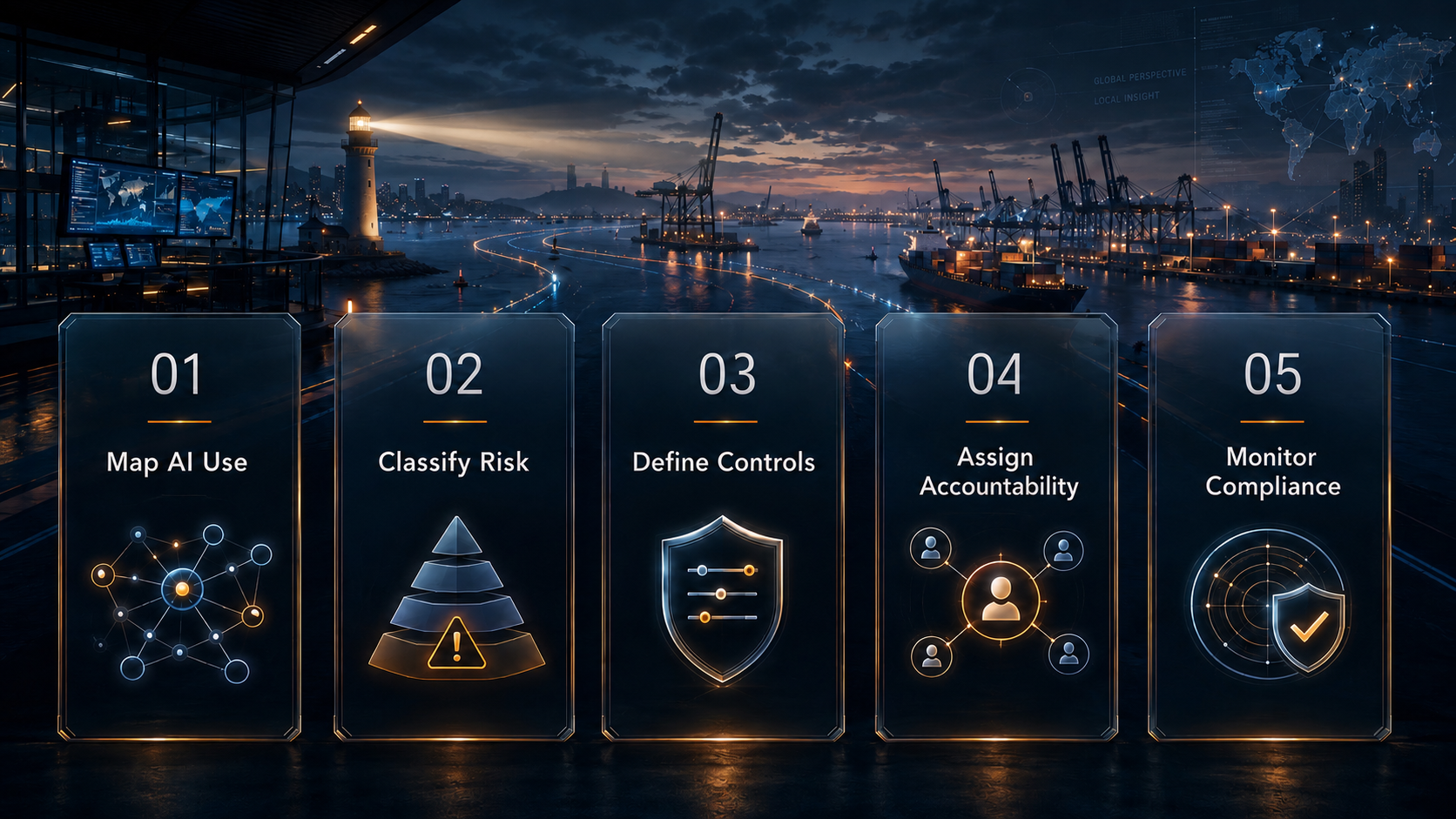
Policies, roles, approval paths and monitoring turn AI from an informal experiment into a managed business capability.
policy
oversight
compliance
policy oversight compliance
From experiment to enterprise use

AI initiatives become enterprise-ready when use cases, data access, legal exposure and operational impact are assessed before deployment.
assessment
validation
deployment
assessment validation deployment
Accountability cannot be automated

AI may support decisions, but responsibility remains with leadership, governance bodies and the organization itself.
governance
fiduciary
accountability
governance fiduciary accountability
Governance is no longer optional

The EU AI Act, data protection law and internal accountability requirements turn AI adoption into a regulated management issue.
regulation
mandate
sanction
regulation mandate sanction